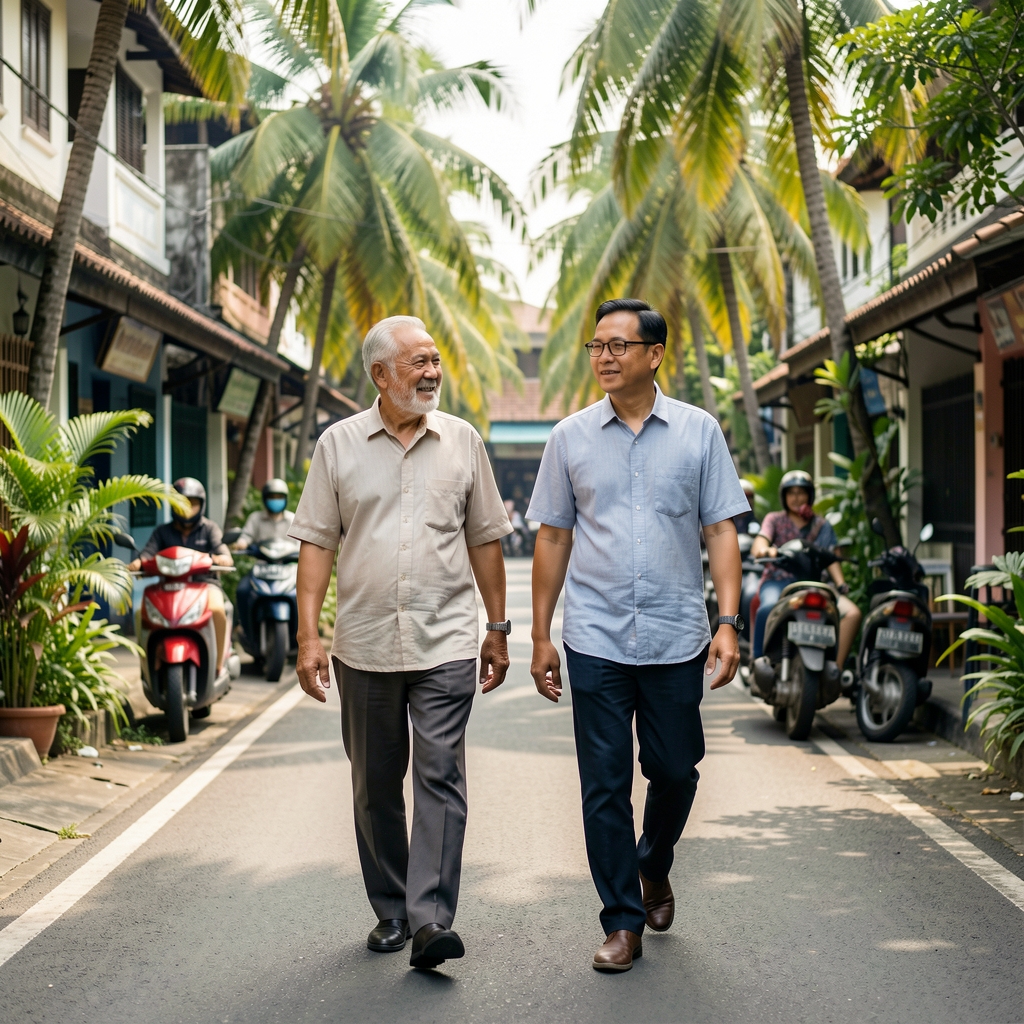
Capacity has many forms
Strength and balance matter, but so do hearing, vision, social connection, purpose, sleep, and access to preventive care. A broad view makes room for the parts of health that are difficult to measure.
The World Health Organization describes healthy ageing as the process of developing and maintaining the functional ability that enables wellbeing in older age. That framing is useful because it places attention on what a person can do and value, rather than only on the absence of illness. A man in his late thirties who is building a regular walking habit, a circle of friends, and a relationship with a trusted clinician is already contributing to this kind of capacity.
Ageing is also shaped by context. Housing, transport, income, family responsibilities, and the local climate all influence what is realistic. Indonesia’s urban centres, including Jakarta, bring particular conditions such as heat, traffic, and air quality, and these are discussed in our environment guide.